
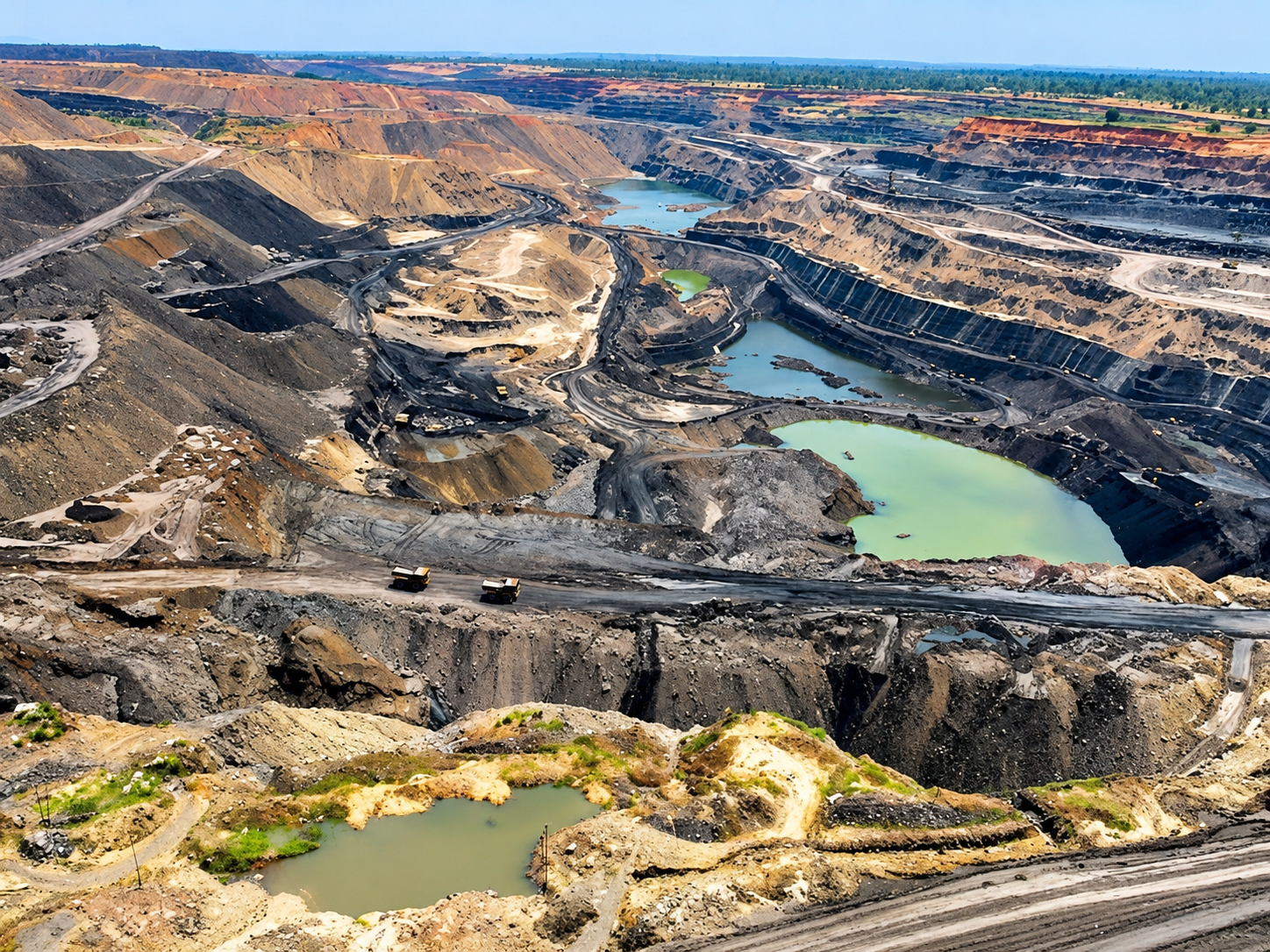
Asian thermal coal prices are likely to remain elevated over the next few months as uncertainty over Indonesian supplies and lower Chinese production constraints availability, while gas-to-coal switching in Japan and South Korea supports demand, according to a report by Fitch Ratings.
The rating agency said the tight supply outlook, along with winter restocking, would support prices in the near term, benefiting coal miners through stronger cash flows and improved debt-servicing capacity.
Indonesian coal exports have faced disruptions from uncertainty over mining quotas and logistical constraints. Severe drought linked to El Nino has restricted barging along the Barito River, contributing to a 23.3% year-on-year decline in exports in August and an 18.1% fall in September.
Some Indonesian producers have declared force majeure on coal shipments because they could not secure mining quotas or faced logistical bottlenecks, Fitch said. Although the government eased its initial 2026 coal production target of 600 million tonnes, compared with an actual output of 790 million tonnes in 2025, uncertainty over 2027 quotas and export policies continues to affect operating visibility.
China's coal production has also been weak following tighter safety inspections after a mine accident in Shanxi in May. National raw-coal output declined 10.1% year-on-year in July and 7.7% in August, leaving production down 3.3% in the first eight months of 2026.
Fitch expects Chinese production to recover gradually, which could eventually ease prices. However, the timing will depend partly on whether Indonesian supply constraints and logistical disruptions persist.
Fitch expects Chinese thermal power generation to remain broadly flat or decline mildly in 2027 as new renewable capacity meets additional electricity demand.
For miners, higher prices should support near-term earnings, particularly for low-cost producers with strong balance sheets. However, Fitch said rising regulatory uncertainty and costs in Indonesia remain important credit risks, while the longer-term shift away from thermal coal continues to weigh on the sector's export outlook. - ANI